
Getting dressed for a run sounds simple until you are standing in front of your wardrobe at 06:00 in the morning, the thermometer says 8°C, and you are trying to remember whether that is gloves weather or not. The answer depends on more than the temperature. Intensity, wind, rain, and whether it is a 25-minute easy jog or a 90-minute long run all change what you should be wearing. This guide breaks down the logic behind dressing for every condition, season by season, so you stop guessing and start running in the right gear every time.
The One Rule That Actually Works
Most advice about running clothes starts with a temperature chart. Those are useful as a starting point, but they miss a crucial variable: how hard you are running. Your body generates significantly more heat during a tempo run than during an easy recovery jog at the same outdoor temperature. Dressing for your effort level, not just the temperature outside, will make you far more comfortable.
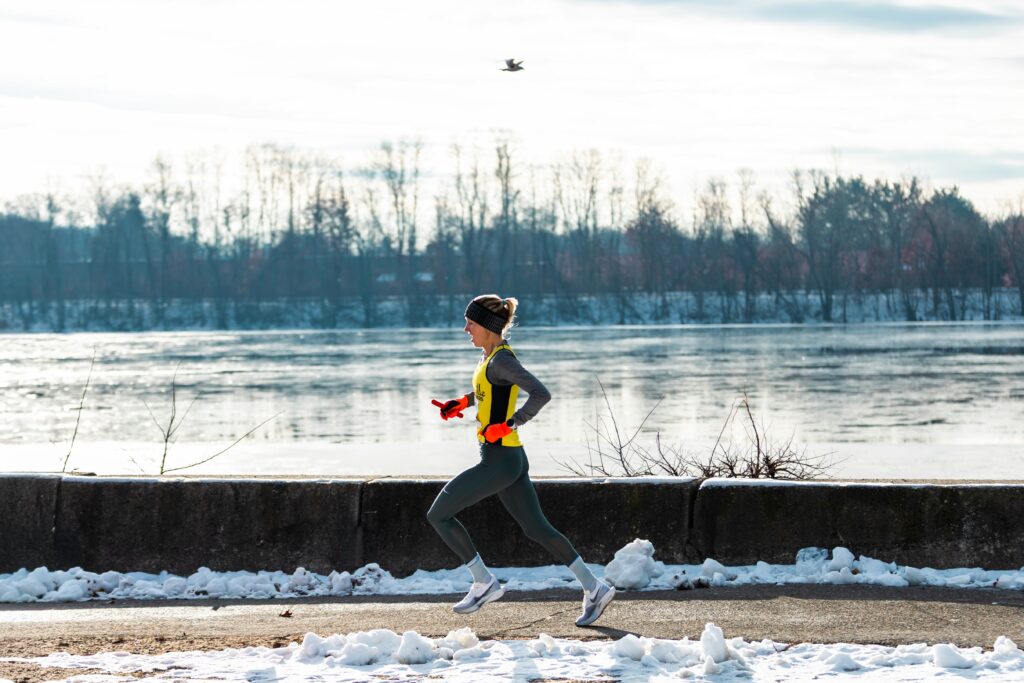
The working principle is this: for easy runs, dress as though it is roughly 10°C warmer than the actual temperature. For harder efforts, add another 5°C on top of that. At the start of a run you should feel slightly underdressed and a little cool. If you feel comfortable standing at the door, you are almost certainly overdressed and will be overheating within 15 minutes. That initial chill disappears quickly once you are moving, and the heat your body generates has nowhere to go if you are wearing too much.
This also matters from a training perspective. If your session is supposed to be easy, whether that is a recovery run or a long aerobic effort at low intensity, overdressing forces your heart rate up as your body works harder to shed heat. You end up running what should be an easy session at a harder effort than intended. Underdressing in genuinely cold conditions is uncomfortable, but overdressing consistently is the more common training mistake and harder to notice because the discomfort comes gradually.
Wind and rain change the calculation in the other direction. Wind makes air temperature feel colder by stripping the warm layer away from your skin, so on a cold, windy day you may need more coverage than the raw temperature suggests. Rain adds another layer of complication because wet clothing loses its insulating properties and, at lower temperatures, can tip you into genuine cold stress even when the air temperature seems manageable. A lightweight waterproof shell solves both problems at once.
What to Wear in Summer (18°C and Above)
Summer running gear has one job: get sweat off your skin fast enough that it can evaporate, which is the mechanism your body uses to shed heat. Anything that traps moisture against your skin turns a hot run into an uncomfortable one, and cotton is the worst offender. Technical fabrics woven from polyester or nylon move moisture away from the skin and dry quickly enough to keep the evaporative cooling process working.
For tops, a lightweight technical tee or singlet in a light colour is the standard choice. Light colours reflect heat rather than absorbing it, which makes a measurable difference on sunny days above 25°C. Mesh panels add ventilation for high-intensity efforts. A running cap or visor protects your face and keeps sweat out of your eyes on long efforts in the sun. Running sunglasses serve a function beyond comfort. Squinting into low morning sun while trying to hold pace is a genuine distraction, and UV exposure accumulates fast during outdoor training.
Sunscreen is not optional for any run in direct sunlight. The practical barrier for most runners is application time and residue, and a sport-specific spray like the Nivea Sun Sport Spray SPF 50 solves both problems. It applies in seconds without rubbing, dries fast, and holds through sweat without migrating into your eyes. Standard sunscreens formulated for casual use are not designed for the sweat output of an hour-long run. Look for broad-spectrum SPF 30 minimum, sweat resistance rated to 80 minutes, and a formula that does not sting the eyes when perspiration runs down your face.
Shorts should be light and allow full range of motion. Most technical running shorts have a built-in liner that removes the need for separate underwear and reduces inner-thigh friction. IIf you are prone to chafing, applying an anti-chafe balm to the inner thighs and underarms before the run saves a lot of post-run discomfort. Socks matter more than most runners realise: in summer, a thin moisture-wicking running sock handles blister prevention better than anything else. The Balega Hidden Comfort works well in warm conditions because the material manages moisture effectively without adding unnecessary bulk.
What to Wear in Autumn and Spring (8–17°C)
This is the range where most runners get it wrong, and the direction of the error is almost always overdressing. The temperatures feel cold, especially if you have been running through summer, but your body warms up fast and a heavy jacket becomes a liability within ten minutes of setting out.
A long-sleeve technical top is usually enough from around 10–15°C for easy runs. If you are doing a harder session or a race in this range, a short-sleeve top may be sufficient. The key is fabric: a moisture-wicking long sleeve that fits snugly rather than hanging loosely keeps you warm without trapping excess heat.
From around 8–10°C, adding a lightweight windproof layer on top becomes worthwhile. The Brooks Canopy Jacket is designed exactly for this kind of transitional weather. It is light enough to tie around your waist when you warm up, and protective enough to take the edge off wind and light rain. A jacket like this bridges the gap between needing a proper waterproof shell and not needing anything at all.
Tights versus shorts is the other decision in this range. Most runners switch to running tights or three-quarter length crops somewhere between 8–12°C, depending on personal cold tolerance. There is no definitive threshold. If your legs do not get cold, shorts at 10°C is a reasonable choice. When choosing tights, fit and practicality matter as much as thermal properties. A tight with a waistband pocket for keys, and ideally a second pocket large enough for your phone, makes a meaningful difference on solo runs where you cannot leave things in a bag. For this temperature band, you do not need thermal or fleece-lined tights. Standard running tights provide enough coverage.
Hands and ears deserve attention in this range. At around 10°C, a thin pair of running gloves is worth carrying even if you do not put them on immediately. The Saucony Fortify Running Gloves are light enough to stuff into a pocket mid-run when you warm up, which is exactly what you want from a transitional glove. A lightweight headband or running hat does the same job for your ears on windier days.
What to Wear in Winter (0–7°C)
At this range, layering becomes the right approach and single-layer choices start to fall short. The reason is simple: your core and extremities have different thermal needs. A thick jacket keeps your torso warm but your hands and ears may still suffer. A layered system lets you add protection where you need it without over-insulating the areas that run hot.
Base layer: a moisture-wicking technical top next to the skin, ideally with a tighter fit that keeps it close to your body. Merino wool works well here for runners doing longer, slower efforts because it manages moisture and temperature more broadly than pure synthetics. For higher intensity work, a lightweight synthetic base layer dries faster.
Mid or outer layer: a windproof or lightly insulated running jacket over the top. At 0–7°C you likely need something more substantial than a packable windbreaker. A soft-shell running jacket or a fleece-backed jacket adds enough warmth without the weight of a full winter coat.
On the bottom half, thermal running tights are the right call below roughly 5°C. Look for a tighter knit or brushed interior. Your legs generate substantial heat while running but still need insulation against persistent wind at low temperatures, particularly on longer efforts. Pocket placement matters here too: a key pocket on the thigh or waistband is not a luxury in winter when you are running in multiple layers and stopping to access your phone is genuinely inconvenient. Look for tights with at least one secure zip or button pocket before buying.
Extremities are where people consistently underinvest. Below 5°C, lightweight running gloves are not optional. They are functional: cold hands constrict blood flow, which slows your warm-up and makes the run miserable. A running hat or a buff covers the remaining exposed skin. A buff is particularly versatile because it can be worn as a neck warmer or pulled up over the nose on the coldest days. Ears and face lose heat fast. For wet winter conditions where rain compounds the cold, a waterproof outer layer becomes the priority. A packable waterproof shell that goes over your base or mid layer handles this without requiring a full rethink of your kit.
Below Zero and Snow
Most European runners will encounter temperatures well below 0°C at some point during winter training. Below -5°C, the standard winter layering system still applies, but the margin for error shrinks: base layer quality and waterproof protection become critical rather than optional. Wind chill at these temperatures can make -8°C feel significantly more dangerous than the raw number suggests. Add a thermal mid-layer between your base and outer shell, and ensure your gloves are wind-blocked rather than just insulating.
Running on snow and ice requires a different mindset on footwear. Road shoes with a softer rubber compound maintain grip better than hard rubber soles in freezing conditions. Many runners shorten their stride and increase cadence naturally on slippery surfaces, which is the right instinct and reduces the load on each footstrike. On packed snow, this is generally manageable. On ice, the honest answer is that most road running shoes offer poor grip, and the safer option is a trail shoe with a more aggressive lug or a dedicated winter running shoe with a compound designed for low temperatures. If your usual routes become genuinely icy, treadmill sessions are not a failure. They are rational risk management.
Socks and Base Layers: The Year-Round Foundation
Two things deserve attention regardless of season.
Running socks are one of the most cost-effective performance investments available. Cotton socks cause blisters because they absorb moisture and then rub. A technical running sock in a synthetic or merino blend manages moisture, reduces friction, and makes a significant difference over longer distances. For recovery after hard efforts, the CEP Recovery Compression Socks serve a different purpose. Worn post-run rather than during it, they improve blood return from the lower legs, which supports muscle recovery. They are not a running sock, but they belong in the same kit conversation.
For winter running, a proper moisture-wicking base layer is structural, not optional. The logic is counterintuitive for new runners: a base layer that holds sweat against your skin will make you colder, not warmer, as soon as you slow down or stop. A wicking base layer solves this by keeping the skin dry even as you generate heat. This matters most on longer runs and in colder, wetter conditions where post-run cooling is faster.
Visibility and Safety
A significant proportion of autumn and winter runs happen in low light or full darkness. Reflective elements on clothing make you visible to traffic from a distance that actually gives drivers time to react. Most technical running jackets include some reflectivity, but it is worth checking before buying. Beyond passive reflectivity, a clip-on running light worn on the chest adds active visibility and serves a dual purpose: it makes you visible to others, and it illuminates the ground directly in front of you. The Noxgear Tracer2 wraps around the chest and is visible from all angles, which solves the problem that a standard rear blinker only covers one direction. On unlit roads or paths, seeing where your feet land is not a minor detail. It is the difference between running confidently and being one pothole away from an ankle injury. A chest-mounted light is preferable to a head torch for most road running because it moves with your breathing rather than your head, giving a steadier beam without the weight of a headlamp.
Building a Running Wardrobe Without Overcomplicating It
You do not need a different outfit for every 5°C increment. A well-chosen set of six to eight items covers most of the year: two technical short-sleeve tops, one long-sleeve technical top, one pair of standard running tights, one pair of shorts, a lightweight windproof or rain jacket, a pair of running gloves, and a hat or buff. That is a complete year-round kit. Snow and extreme cold extend this with a thermal mid-layer and wind-blocked gloves, but those are additions to a solid base rather than a separate system.
For a full breakdown of specific gear picks across all categories, including shoes, watches, socks, and jackets, the best running gear for beginners guide covers each item with specific recommendations. If you are ready to start building your training as well, the running training guide for beginners covers how to structure your weeks and build toward your first race
Want weekly running tips without the fluff? Join the THRUX newsletter.
This article contains affiliate links. If you purchase through these links, THRUX may earn a small commission at no extra cost to you.