You just finished a long run. You’re sweaty, your legs feel like concrete, and you’re staring into the fridge wondering if now is finally the time for that leftover pizza.
Here’s the problem: what you eat in the next 30 to 60 minutes will either accelerate your recovery or slow it down significantly. Most runners obsess over pre-run nutrition — what to eat before a long run, how to carb-load, when to eat breakfast. Post-run nutrition is an afterthought. That’s a mistake.
Your body is in a uniquely receptive state right after a run. Insulin sensitivity is elevated, muscles are primed to absorb nutrients, and the biological machinery for repair is switched on. Miss that window, and you’re leaving recovery on the table.
This guide covers exactly what to eat after a long run — the science behind it, the practical options for every situation, and what to avoid.
What Your Body Actually Needs After a Long Run
Three things happened during your run that you now need to reverse:
1. Glycogen depletion Your muscles run on glycogen — stored carbohydrates. On any run longer than 60 to 90 minutes, you significantly deplete those stores. Until you refill them, your body remains in a catabolic state: it will break down muscle tissue for energy if carbohydrates aren’t available. The longer you wait to eat, the more of that breakdown occurs.
2. Muscle damage Running creates microscopic tears in your muscle fibers. This is normal and necessary — it’s how you get stronger. But repair requires the right raw materials: amino acids from protein. Without adequate protein post-run, repair is slower, soreness lasts longer, and your next run suffers.
3. Fluid and electrolyte loss You lose both water and electrolytes — primarily sodium, potassium, and magnesium — through sweat. Rehydration isn’t just about drinking water. If you replace fluids without replacing electrolytes, you dilute your blood sodium levels, which can cause fatigue, cramping, and in extreme cases, a dangerous condition called hyponatremia.
The Recovery Window: Timing Matters More Than You Think
You’ve probably heard about the “anabolic window” — the idea that you need to eat immediately after exercise or the opportunity is lost. The reality is more nuanced, but timing still matters.
In the 30 to 60 minutes after a long run, your body is primed to replenish glycogen faster than at any other time. Insulin — the hormone responsible for transporting glucose into muscle cells — is operating at significantly elevated levels. Research suggests that combining carbohydrates with protein during this window can increase glycogen resynthesis by up to 30% compared to carbohydrates alone.
The practical rule: eat a recovery snack within 30 to 60 minutes of finishing. Follow it up with a full meal within 2 hours.
If you’re not hungry immediately after running — which is common, especially after hard efforts — a liquid option like a protein shake or chocolate milk is easier to tolerate than solid food.
What to Eat: The Ratios
Forget complicated formulas. The core principle is simple:
Carbohydrates + Protein, in a roughly 3:1 or 4:1 ratio.
For a 75 kg runner after a 20 km long run, that means approximately:
- 75–100 g of carbohydrates
- 20–25 g of protein
You don’t need to weigh everything. Use these as rough targets, not precise calculations.
Fat plays a supporting role — it helps with nutrient absorption and reduces inflammation. Don’t avoid it, but don’t prioritize it in the immediate recovery window either. It slows digestion, which you don’t want right after a run.
Best Recovery Foods: Quick Options (Within 30 Minutes)
These are practical options for when you need something fast — before you shower, change, or sit down properly.
Chocolate milk The original recovery drink, and still one of the best. It naturally delivers roughly a 4:1 carb-to-protein ratio, plus fluid and electrolytes. Affordable, widely available, and effective. The research on chocolate milk as a recovery drink is genuinely strong.
Banana + protein shake A ripe banana provides fast-absorbing carbohydrates. A scoop of whey protein mixed with water or milk adds the amino acids your muscles need. Quick to prepare, easy to digest. A quality whey protein like Optimum Nutrition Gold Standard mixes cleanly and is well-tolerated on a sensitive post-run stomach. Not sure which protein type works best for you? Our guide to protein for runners breaks down the differences between whey, casein, and plant-based options.
Greek yogurt with fruit Greek yogurt is high in protein (15–20 g per serving), and adding a banana or handful of berries provides the carbohydrate component. Easy to prepare and genuinely good for recovery.
Recovery bar Useful when you’re away from home — after a race, a trail run, or a long run that takes you far from your kitchen. Look for a bar with at least 20 g protein and 40+ g carbohydrates. Avoid bars that are primarily fat or fiber — they won’t serve your recovery goals. A solid option: Clif Builder’s Bar.
Best Recovery Meals: Full Refuel (Within 2 Hours)
Your recovery snack buys time. Your recovery meal finishes the job. These are whole-food options that cover all bases.
Rice + grilled chicken or fish A classic for a reason. White rice is easy to digest and rapidly replenishes glycogen. Lean protein supports muscle repair. Add roasted vegetables for micronutrients and anti-inflammatory compounds. Takes 20 minutes to prepare.
Pasta with tomato sauce and ground beef or turkey If you’re doing back-to-back long runs or training heavily, pasta provides the carbohydrate volume you need. Ground beef adds iron — important for runners, who tend to have higher iron turnover from the impact of each stride.
Eggs on toast with avocado A strong option for morning runners. Eggs provide complete protein with all essential amino acids. Whole grain toast adds complex carbohydrates. Avocado contributes healthy fats and potassium, one of the key electrolytes lost through sweat.
Smoothie bowl If you can’t face solid food, blend banana, mixed berries, Greek yogurt, a scoop of protein powder, and a handful of oats. Top with granola or nuts. You get carbohydrates, protein, and micronutrients in a format that’s easy to eat when your appetite hasn’t fully returned.
For more recipes along these lines — made from whole ingredients and timed around training — see our homemade sports nutrition recipes.
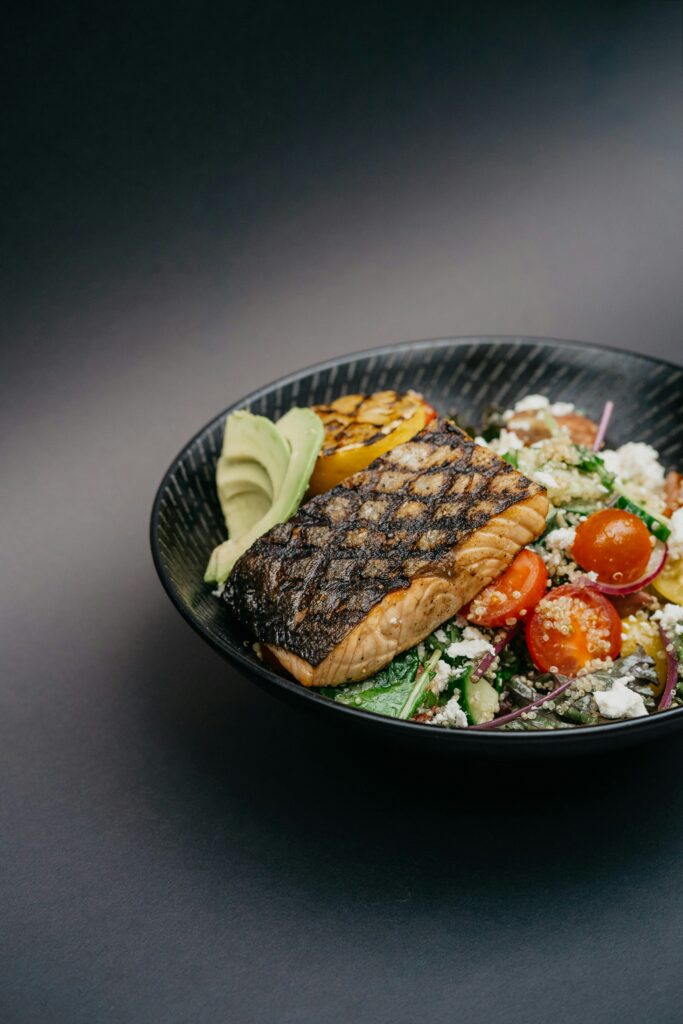
Salmon with sweet potato A premium recovery option. Salmon is rich in omega-3 fatty acids, which reduce exercise-induced inflammation and support muscle repair. Sweet potato delivers a steady carbohydrate release. One of the best long-run recovery meals you can eat, particularly if soreness is an issue.
The Underrated Recovery Tool: Tart Cherry
If you regularly deal with muscle soreness after long runs, tart cherry is worth knowing about. Multiple studies have shown that tart cherry — either as juice or in capsule form — reduces inflammation and accelerates recovery of muscle function after endurance exercise.
It’s not magic, and it doesn’t replace good nutrition. But for runners training at high volume or dealing with persistent soreness, adding tart cherry to your post-run routine is one of the more evidence-backed marginal gains available.
Rehydration: Don’t Forget Electrolytes
Drinking plain water after a long run is better than nothing, but not optimal. You lose sodium, potassium, and magnesium through sweat — and these need to be replaced alongside fluids.
For runs over 90 minutes or runs in warm conditions, adding an electrolyte tablet to your post-run water helps restore fluid balance faster and reduces the risk of cramping. Nuun Sport is a clean option with no artificial sweeteners — drop one tablet into 500 ml of water and you’re covered.
What to Avoid After a Long Run
Alcohol A post-race beer feels deserved, but alcohol directly interferes with glycogen resynthesis and muscle protein synthesis — the two processes you most need running after a long run. If you’re going to drink, do it after your recovery meal, not instead of it.
Heavy, greasy food After a long run, blood flow is diverted toward muscle recovery rather than digestion. Fatty, fried food takes longer to digest, can cause nausea, and delivers very little of what you actually need. Save the burger for later in the day.
Skipping eating entirely Common among runners who are trying to lose weight. This is counterproductive. Skipping your post-run meal doesn’t accelerate fat loss — it delays recovery, breaks down muscle tissue, and increases your injury risk. Your body burns significant energy during a long run. Not replenishing it is a stress signal that triggers cortisol, which promotes muscle breakdown, not fat loss.
A Simple Post-Run Recovery Protocol
If you want a no-thinking-required system, use this:
- Within 30 minutes: Chocolate milk, a protein shake with a banana, or Greek yogurt with fruit. Add 500 ml of water with an electrolyte tablet.
- Within 2 hours: A full meal with lean protein, complex carbohydrates, and vegetables.
- Rest of the day: Continue eating normally. Don’t undereat. Stay hydrated.
That’s it. No complicated timing windows, no obsessing over exact ratios. Consistent execution of these basics will put you ahead of most runners.
The Bigger Picture
Post-run nutrition is one piece of the recovery puzzle. Sleep, easy runs between hard efforts, and smart training load management all matter equally — including tools like the best foam roller for runners to work through post-run tightness. But nutrition is the piece you have complete control over every single time you finish a run.
If you’re fueling well before runs (see our guide to what to eat before a long run), fueling during (how to fuel a half marathon and which energy gels to use) and now after — you’re building a complete nutritional system that compounds over time. That consistency is what turns training into fitness. For the full framework in one place, the running nutrition guide ties every piece together.
This article contains affiliate links. If you purchase through these links, THRUX may earn a small commission at no extra cost to you.