
A gran fondo is not a long training ride. It is a structured effort over 80 to 160+ km, often with significant climbing, a moving start time, and no guarantee of stopping. Your nutrition plan from last Saturday’s four-hour ride will not transfer without adaptation. Here is how to get it right.
Why Gran Fondo Fuelling Is Different
Most recreational cyclists underestimate how much energy a gran fondo demands. Glycogen stores in the muscles max out at roughly 400 to 500 grams, the equivalent of about 1,600 to 2,000 calories, which can be depleted in two to three hours of moderate riding. A gran fondo typically runs three to six hours. That gap between stored energy and energy demand is the entire problem your nutrition plan needs to solve.
The intensity profile of a gran fondo also differs from a standard long ride. You will have periods of hard climbing, fast descents where you can barely eat, and sustained tempo efforts on flat sections. Your gut absorbs less efficiently when you are pushing into zone 4 or 5, which means timing your intake around intensity becomes as important as the total quantity.
Carbohydrate Targets Per Hour
The practical target for a gran fondo is 60 to 90 grams of carbohydrate per hour once you are past the first 45 minutes. The standard sports nutrition recommendation of 30 to 60 grams per hour reflects the absorption limit for a single carbohydrate type, but using multiple carbohydrate sources, glucose and fructose combined, raises the ceiling to 90 grams or more. Most gels and sports nutrition products already blend these transporter pathways, which is why dedicated sports nutrition performs better than sugary drinks alone on long efforts.
For a five-hour gran fondo, that works out to roughly 300 to 450 grams of carbohydrate consumed during the ride. Plan it out before the start line. If your jersey pockets hold six gels, you know you need to supplement at aid stations or carry more.
The Pre-Ride Window
Eat a carbohydrate-heavy meal three to four hours before the start. Pasta, rice, oats, or a large sandwich with white bread all work. Keep fat and fibre low in this meal because both slow gastric emptying and can cause GI distress during a hard effort. In the final hour before your ride, a smaller carb-rich snack like a banana, energy bar, or bagel tops up your liver glycogen without requiring significant digestion time.
If your start is early and a full meal is not practical, shift to a larger snack 90 minutes out and supplement with a gel or a few chews fifteen minutes before the gun. The goal is to begin with full glycogen stores without a heavy stomach.
What to Carry
A well-stocked jersey for a gran fondo typically contains a mix of fast and slow-releasing fuel. Gels are your primary tool for hard segments: they absorb quickly, require minimal chewing, and are easy to take on a climb. The Maurten Gel 100 uses a hydrogel formulation that reduces GI sensitivity at higher intensities, which matters on a long day when stomach tolerance deteriorates. The SiS Beta Fuel delivers 40 grams of carbohydrate per gel at the 2:1 glucose-to-fructose ratio that maximises absorption, making it a strong option for riders pushing toward the 90-gram-per-hour ceiling.
Energy bars and real food belong in your pockets for the flatter sections and aid station breaks. A banana, a rice cake, or the best energy bars for cyclists provides variety that prevents the flavour fatigue that hits around hour three. Gut training in the weeks before a gran fondo significantly affects how much you can comfortably absorb per hour, so practise eating at full fuelling rates on your long training rides.
Hydration on the Bike
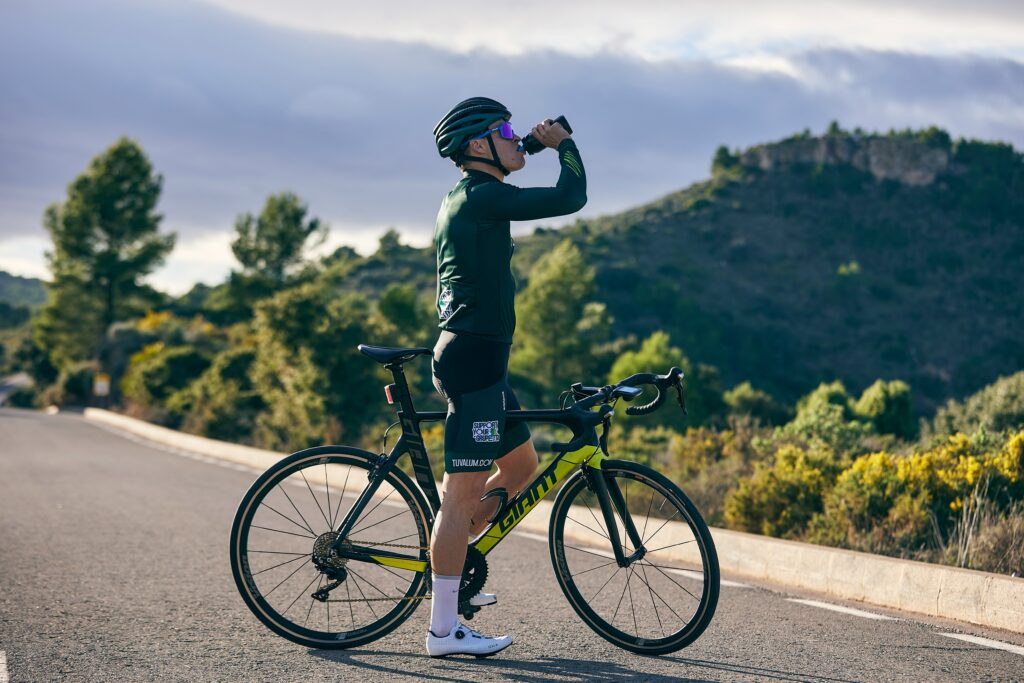
Target 500 to 750 ml of fluid per hour depending on temperature and effort level. On a warm day with significant climbing, you will need the upper end of that range. Plain water is fine for the first 60 to 90 minutes if you have eaten well beforehand, but once you are into hour two, a bottle that includes electrolytes becomes important for sodium replacement. Sodium drives fluid absorption and reduces cramping risk on long efforts.
A wide-mouth, insulated cycling bidon makes a real practical difference on multi-hour rides. The Camelbak Podium keeps fluid cold longer and the flow rate makes drinking on climbs less of a chore. Refill at every aid station even if you feel fine. Waiting until you are thirsty means you are already behind.
When to Eat on the Bike
Timing your intake around terrain is one of the most underrated skills in gran fondo nutrition. Descents are ideal moments to eat: use the summit of a climb to pull food from your pocket, then chew while descending with both hands free to return to the bars on the technical sections. Eating at the bottom of a long climb, during a hard interval, or on technical terrain where you need full control is a mistake that costs you a gel in your lap or a stomach that refuses to process food under load.
Set an alarm on your GPS watch for every twenty minutes. This removes the reliance on hunger signals, which become unreliable under sustained effort. On longer rides it is better to be slightly under-fuelled than over-fuelled, because a minor caloric deficit corrects quickly with 20 to 25 grams of carbohydrate, while an overloaded gut causes nausea that only resolves by slowing down significantly.
Kilometre-by-Kilometre Breakdown for a 120 km Gran Fondo
Think of the ride in thirds. The first third, roughly the opening 40 km, is where most riders make the mistake of underestimating how much they need to eat because they still feel good and glycogen stores are adequate. Start fuelling at the 30-minute mark regardless of hunger. One gel or half a bar is enough to prime the system.
The middle third is where the real nutrition work happens. This is typically the longest section in terms of climbing and sustained effort. Hit your full carbohydrate target per hour here: 60 to 90 grams depending on intensity and your trained gut capacity. Do not allow the excitement of a fast group or a scenic descent to push your eating schedule off track.
The final third is where underfuelling in the first two thirds catches up with you. If you have hit your targets consistently, you should be able to maintain pace to the finish. If you skipped gels to save weight or felt too full at hour two, this section will expose it. A gel or two in the final 30 km can bridge a glycogen gap, but recovery from a bonk takes much longer than prevention.
Linking Your Ride Nutrition to a Training Nutrition Habit
A gran fondo is the test, not the classroom. If you have been following a structured approach to running nutrition or general endurance nutrition in your weekly training, the principles transfer directly: carbohydrate before and during sustained effort, electrolytes for sweat replacement, protein for recovery after. The cycling-specific adjustments are largely about the format of delivery, bars and bidons rather than gels and flasks, the longer duration, and a few key differences in how your gut behaves on the bike compared to running — covered in detail in cycling nutrition for beginners. For more on how cycling nutrition sits within a broader endurance framework and what changes when you are training for a triathlon, the cycling nutrition guide pulls the full picture together.
Want weekly running nutrition tips without the fluff? Join the THRUX newsletter.
This article contains affiliate links. If you purchase through these links, THRUX may earn a small commission at no extra cost to you.