Most runners foam roll inconsistently, grab whatever is in the sports shop, and wonder why it doesn’t seem to do much. The problem usually isn’t technique or frequency — it’s the roller itself. A foam roller that’s too soft compresses without releasing anything. One that’s too firm triggers a protective muscle response that defeats the purpose. Choosing the right tool is the first step.
Why Foam Rolling Works — And Why It Often Doesn’t
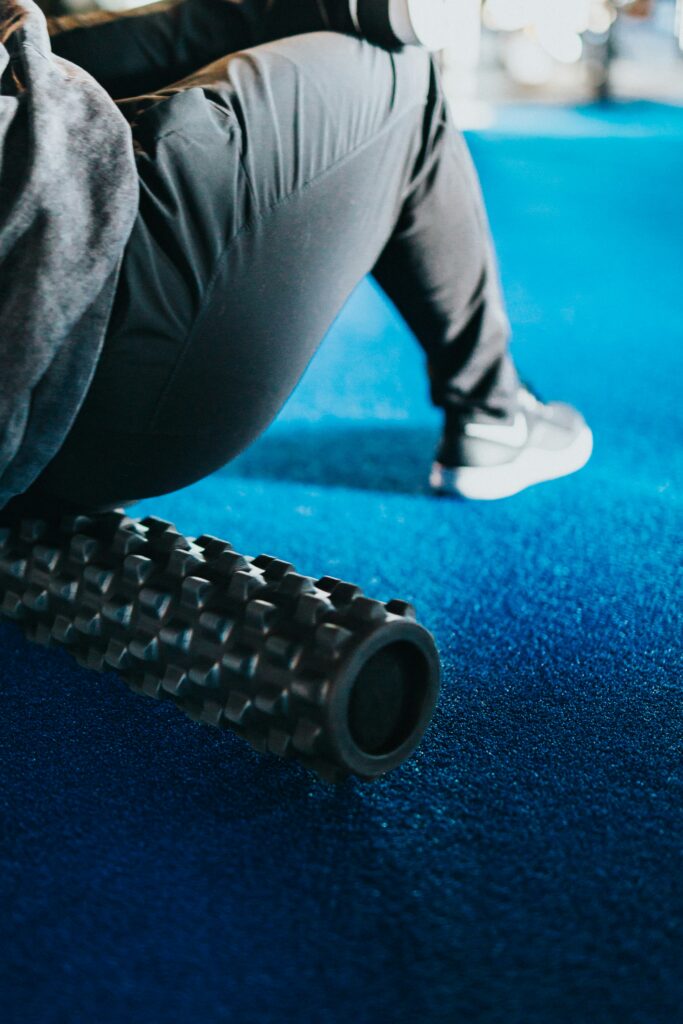
Foam rolling is a form of self-myofascial release: you use your body weight to apply pressure to the fascia — the connective tissue wrapped around your muscles — and the muscles themselves. Done correctly, it helps break up adhesions, improve circulation, and reduce post-run soreness by increasing blood flow to the tissue you just worked.
The research on foam rolling is solid but not dramatic. Studies consistently show improved range of motion and reduced delayed-onset muscle soreness, particularly when rolling after training. The effect on performance is smaller and more variable. What the evidence does support clearly is the recovery application: rolling after long runs and hard sessions helps your muscles recover faster and stay more mobile over time.
The reason foam rolling often disappoints runners isn’t science — it’s implementation. Rolling too fast turns it into a massage, not a release. Rolling on a soft roller that collapses under your body weight is essentially a slightly uncomfortable way to lie on the floor. And rolling directly on the IT band — one of the most common mistakes — compresses the band without affecting the muscles that actually cause the tightness. More on that below.
What to Look for in a Foam Roller for Runners
Density matters more than brand. A medium-density roller with a textured surface outperforms both soft rollers and extra-firm smooth rollers for most runner use cases. Soft rollers don’t apply enough pressure to release tight tissue. Extra-firm smooth rollers can cause the muscles to guard against the pressure — and a muscle that’s bracing accomplishes nothing.
Texture matters for runners specifically because running creates fascial adhesions in the same tissue paths, session after session. A textured roller — one with ridges, zones, or a grid pattern — breaks into that tissue from multiple angles. A smooth roller provides even pressure, which is fine for beginners or for post-run cooldown when muscles are already warm, but it lacks the targeted action that experienced runners need.
Size is a secondary consideration. A 33 cm roller handles everything from quads and hamstrings to upper back. A shorter roller (around 30 cm) covers the same muscle groups with slightly less stability but fits better into a gym bag.
The Best Foam Rollers for Runners
TriggerPoint GRID — Best for Most Runners
The TriggerPoint GRID is the benchmark against which most foam rollers are measured, and for good reason. The patented multi-density surface — three distinct zones that replicate the flat of a palm, the fingers, and the fingertips of a massage therapist’s hands — delivers targeted pressure across different areas of the same roll. The rigid hollow core prevents it from flattening under load, which is a real issue with cheaper foam-filled rollers used daily.
The original 33 cm version is the right choice for most runners. It’s compact enough to use comfortably on quads, calves, and upper back, and portable enough for race weekends. The GRID X is the extra-dense version of the same roller — worth considering if you’ve been rolling regularly for a year or more and your muscles have adapted to medium density.
This is the roller most physiotherapists and running coaches point to as the default recommendation. It’s not the cheapest option, but it holds its shape and effectiveness over years of daily use. A foam roller that lasts two years at its purchase price works out cheaper per session than a budget roller you replace every six months.
Blackroll Standard — Best for Beginners and Budget-Conscious Runners
The Blackroll Standard is a German-made roller that has become the default entry-level option across European physiotherapy clinics and running clubs. It’s built from recyclable expanded polypropylene (EPP), which gives it a firm but not punishing density — noticeably harder than a typical soft EVA roller, and well-suited to runners working on general recovery without the aggressive texture of the TriggerPoint.
The surface is smooth, which makes it less targeted than the GRID but more accessible if you’re new to foam rolling or have lower pain tolerance. It works well on large muscle groups: quads, glutes, hamstrings, and upper back. For calves and IT band work, a shorter or more textured tool will serve you better.
At roughly €20–25 on European Amazon, it’s hard to argue against the Blackroll Standard as a starting point. If you’re unsure whether foam rolling will become a consistent habit, this is the roller to test with before investing in a more premium option.
How to Actually Use a Foam Roller for Running Recovery
The two most important muscles to roll as a runner are the quads and glutes. These are the primary drivers of running mechanics, they take the highest load, and they’re most likely to become tight in a way that creates compensatory patterns elsewhere. Start there.
Roll slowly — roughly 2–3 seconds per 5 cm of tissue. When you find a tender spot, pause and hold pressure for 20–30 seconds until the tension begins to release. Don’t roll directly over a joint, bone, or the IT band itself. The IT band is not a muscle; it doesn’t release through pressure. Instead, roll the TFL (the small muscle above the band, on the side of the hip) and the lateral quad — these are the actual targets for runners with IT band tightness.
For timing: rolling before a run helps prime tissue for activity — keep sessions short, around 60–90 seconds per muscle group, and lighter pressure. Post-run recovery rolling can be longer and more targeted, 2–3 minutes per area, and is where most of the adaptation benefits accumulate.
For runners following a structured training plan — including the kind of half marathon preparation covered in the half marathon training plan for beginners — foam rolling works best as a consistent daily habit, not a reactive tool you reach for only when something hurts.
Foam Roller vs. Massage Stick vs. Massage Ball
A foam roller is not the only recovery tool that works, and for some running-specific problems, it’s not the best one. Massage sticks (sometimes called roller sticks) apply pressure through your hands rather than your body weight, which gives you more control on narrow areas like calves and shins. Massage balls — particularly lacrosse balls or dedicated recovery balls — are better for small, pinpointed areas like the glutes, plantar fascia, and the tissue around the Achilles.
For most recreational runners, a foam roller handles 80% of recovery needs. If you have recurring calf or Achilles issues, a massage ball is a worthwhile addition. If budget and storage space allow only one tool, the foam roller covers the most ground.
Runners already tracking their training load and recovery metrics will find foam rolling pairs naturally with the kind of structured approach covered in the endurance athlete recovery guide.
Want weekly running nutrition tips without the fluff? Join the THRUX newsletter.
This article contains affiliate links. If you purchase through these links, THRUX may earn a small commission at no extra cost to you.