Most runners overthink their nutrition. They scan ingredient lists, order specialist products online, and spend more on race-day fuel than on race-day entry fees.
Here’s what the research actually shows: for the majority of training runs, everyday whole foods work just as well as purpose-built sports nutrition — sometimes better. Real food comes with fiber, micronutrients, and natural sugars that your body recognises and processes efficiently. It also comes without the price tag.
This guide covers the best everyday foods to fuel your running, when to eat them, and a few simple recipes to take with you on longer efforts.
Why Whole Foods Work
Your body runs on carbohydrates. During a run, it breaks down glycogen — stored carbohydrate — into glucose and uses it as fuel. The goal of pre-run nutrition is to top up those glycogen stores. The goal of mid-run nutrition is to maintain blood sugar levels so you don’t hit the wall.
Commercial gels and chews do this efficiently. So do bananas, rice, and oats. The difference is mostly in convenience and cost, not in performance — at least for training runs and recreational racing distances.
A banana before a run delivers roughly the same carbohydrate load as a gel. A bowl of oats two hours before a long run provides sustained energy that most gels can’t match. These aren’t budget compromises. They’re smart choices.
The Best Everyday Foods for Runners
Bananas
Fast-digesting, easy on the stomach, and naturally high in potassium — which plays a role in muscle function and fluid balance. Eat one 30–60 minutes before a run as a quick energy boost, or slice one up and carry it in a small bag for mid-run fuel on longer efforts.
They’re also one of the easiest recovery snacks: eat one immediately after a run to start replenishing glycogen before your main meal.
Oats
One of the best pre-run meals available. Oats are a slow-releasing carbohydrate, which means steady energy over 2–3 hours rather than a quick spike. A bowl of porridge before a long run — with a banana stirred in — is a complete pre-run meal that costs a fraction of any commercial alternative.
Avoid instant oats if you can: rolled or steel-cut oats have a lower glycemic index and provide more sustained energy.
White rice
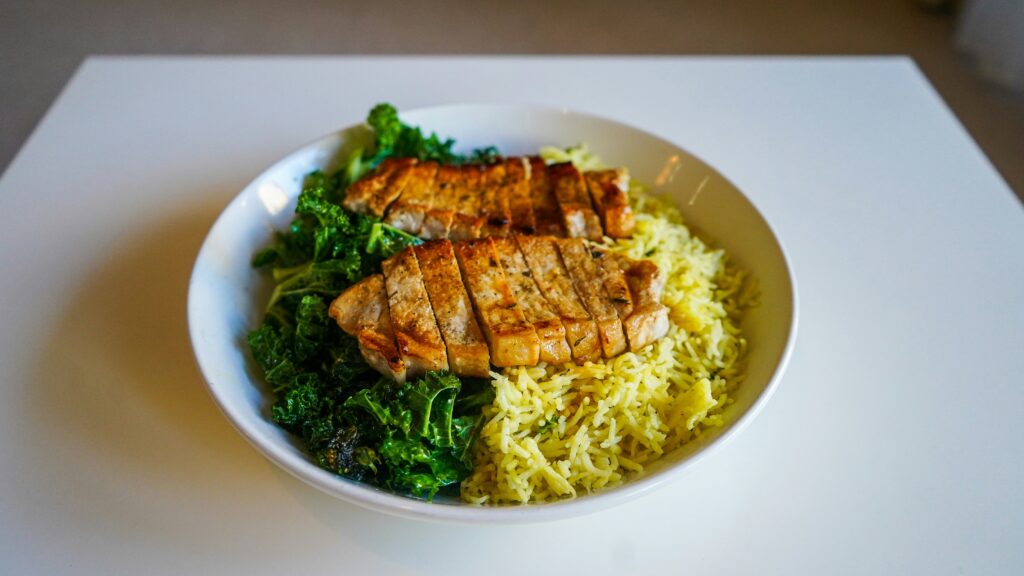
White rice is a staple for endurance athletes because it’s low in fiber, easy to digest, and high in carbohydrates. Unlike brown rice, it doesn’t sit heavily in your stomach during a run. Cook a batch at the start of the week and portion it into containers — you’ll have ready fuel for every session without any extra effort.
Pair with a small portion of chicken or eggs for a full pre-run meal 2–3 hours before a harder session.
Bread and jam
Simple, effective, and underrated. Two slices of white bread with jam delivers fast carbohydrates without the fat or fiber that can cause stomach issues mid-run. It works well as a pre-run snack 60–90 minutes before an easy to moderate effort.
Use white bread rather than wholegrain before runs — the lower fiber content means faster digestion and less GI risk.
Boiled potatoes
Potatoes are one of the most complete carbohydrate sources you can find in a normal supermarket. High in potassium, easy to digest when boiled, and surprisingly effective as mid-run fuel. Lightly salted boiled potatoes give you carbohydrates and sodium together — exactly what you need on longer efforts.
Many ultramarathon runners use boiled potatoes as mid-run fuel at aid stations. If it works at 100km, it works on your Sunday long run.
Dates and raisins
Natural sugars, easy to carry, no packaging. A small handful of dates or raisins provides a fast carbohydrate hit mid-run without the need for any preparation. They’re slightly stickier than a gel but far cheaper and made from exactly one ingredient.
Sweets and gummy candy
It sounds counterintuitive, but regular sweets — gummy bears, wine gums, jelly babies — are a legitimate mid-run fuel source. They’re fast-digesting simple sugars, easy to carry in a zip-lock bag, and available at every petrol station and supermarket. Many experienced runners use them on long training runs as a practical alternative to commercial chews.
Keep the portions small and consistent: a small handful every 45–60 minutes on runs over 75 minutes.
Eggs
Eggs are for recovery, not pre-run fuel. After a hard session, your muscles need protein to repair and adapt. Two eggs — scrambled, boiled, or poached — on toast gives you high-quality protein and carbohydrates in one meal. Eat within 30–60 minutes of finishing your run. For a complete post-run recovery plan — what to eat, when, and in what quantities — see our guide on what to eat after a long run.
Homemade Energy Balls
If you want something more portable for longer efforts, making your own is straightforward and significantly cheaper than buying commercial alternatives.
Basic recipe (makes 15):
- 200g rolled oats
- 3 tbsp peanut butter
- 3 tbsp honey
- Pinch of salt
- Optional: dark chocolate chips, desiccated coconut, a few dates blended in
Mix everything together, roll into balls roughly the size of a golf ball, and refrigerate for at least an hour. Each ball gives you a mix of fast and slow carbohydrates with a small amount of fat — well suited for longer, lower-intensity efforts.
For more ideas, check out our homemade sports nutrition recipes — including rice cakes, sport waffles, and a recovery shake.
Hydration on a Budget
Sports drinks are mostly water, sugar, and salt. You can replicate that at home.
For runs under 60 minutes in normal conditions, plain water is sufficient. For longer runs or warm weather, a simple homemade electrolyte drink works well:
- 500ml water
- Juice of half a lemon
- 1 tsp honey
- Small pinch of salt
Mix and carry in a regular water bottle. The cost is minimal and the effect is comparable to most commercial electrolyte drinks for recreational training.
Timing Guide
The same timing principles apply regardless of what you eat:
- 2–3 hours before: Full meal — oats, rice, potatoes with a protein source
- 60–90 minutes before: Light snack — banana, bread and jam, energy ball
- 30 minutes before: Half a banana, a few dates, or nothing at all
- During runs over 75 minutes: Small amount of carbohydrate every 45–60 minutes — dates, sweets, banana pieces, energy balls, boiled potatoes
- After your run: Protein and carbohydrates within 30–60 minutes — eggs on toast, rice with chicken or tuna → Full recovery guide: what to eat after a long run
What to Avoid Before a Run
A few foods that cause problems regardless of how healthy they are day-to-day:
- High-fiber foods — wholegrain bread, raw vegetables, legumes. They slow digestion and increase GI risk during a run.
- High-fat foods within 2 hours — cheese, fried food, fatty meat. Fat delays gastric emptying.
- Carbonated drinks — bloating is uncomfortable enough on the sofa.
- Anything new on race day — always test your nutrition strategy in training first.
The Bottom Line
You don’t need specialist products to fuel your running well. Oats, bananas, rice, bread, dates, sweets, and eggs cover everything most recreational runners need across training and racing.
Use commercial energy gels and drinks when the convenience genuinely matters — on race day, or on a long run where carrying real food isn’t practical. For daily training, the supermarket gives you everything you need.
Want to go deeper on pre-run nutrition specifically? Read: What to Eat Before a Long Run. Up next: How to Fuel a Half Marathon — a complete race-day nutrition plan. For a full overview of how nutrition fits into every part of your training — daily diet, fuelling during runs, recovery, and race week — the running nutrition guide covers it all.
Want weekly running nutrition tips without the fluff? Join the THRUX newsletter.